
Step 1: Set Up Your User Profile
Before you do anything else, complete your User Profile. This is what Cloverleaf AI uses to personalize your AI-generated insights - the more context you give it about your role, focus areas, and the topics you track, the more relevant everything else in the platform will be.
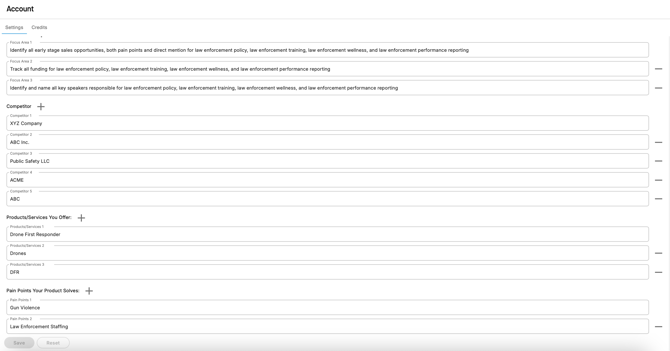
Click your avatar in the lower left corner, then click your email address to open your profile. Fill in your Job Title, Industry, Focus Areas, Competitors, Products and Services, and Pain Points.
Tip: Use the language government officials use in meetings - not internal jargon or product names. See the User Profile Setup article for detailed guidance on building a strong profile.
Step 2: Start from a Campaign
Most users hit the ground running by loading a pre-saved Campaign directly from the search page. At the top of the search page, use the Campaign dropdown to select any Campaign you're subscribed to or any Campaign created by your team. This instantly loads the keywords, filters, and geographic settings from that Campaign so you can jump straight into your results.
If you're starting fresh and don't have a Campaign yet, skip to Step 3 to run your first search - then come back to Step 4 to save it.
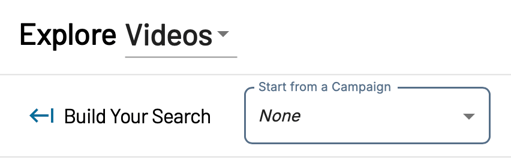
Tip: Your team's Campaigns are visible in the dropdown too - a great way to see how colleagues have set up their searches and build on what's already working.
Step 3: Run a Search
From the Home page, use the search bar to explore what government bodies have been discussing.
First, use the dropdown at the top of the search bar to choose what you want to search:
- Videos - Search transcribed government meeting recordings
- Documents - Search meeting agendas, minutes, packets, and public notices
Then build your search:
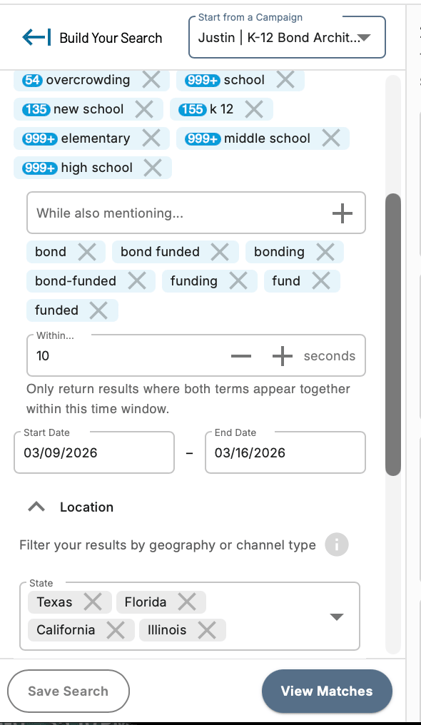
- Type a keyword or phrase and click Add Term - you can add as many terms as you want
- Each term uses OR logic - results will include any meeting or document where at least one term appeared
- Use the Proximity Search toggle to add anchor terms that act as AND filters, requiring both sets of terms to appear within a set time range (start with 30-60 seconds)
To narrow by location, use the dropdowns to filter by State, County, or City. Use the Advanced Filters toggle for additional options including Channel Type.
Cloverleaf AI defaults to the last 7 days. Click the calendar icon to adjust your date range.
Tip: Not sure where to start? Try searching for your product category, a funded program, or terms like "procurement," "contract," or "budget" to see what's already being discussed in your markets.
Step 4: Save Your Search as a Campaign
When you find a search worth monitoring, save it as a Campaign so Cloverleaf AI tracks it automatically and delivers new results to your inbox.
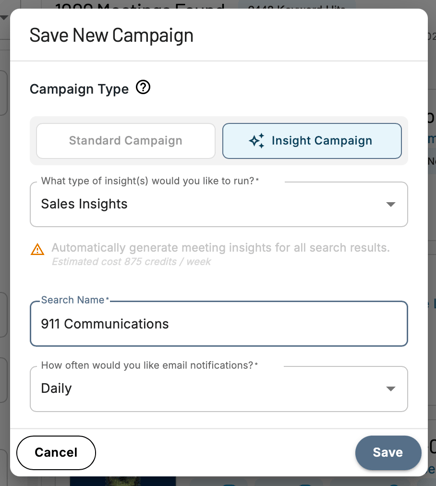
- From the search results page, click Save as New Campaign
- Give your Campaign a name
- Use the Insight dropdown to select which AI Insight you want included in your alerts - this determines what kind of AI-generated analysis accompanies your matching results
- Choose your alert frequency - Daily (7am ET, previous 24 hours) or Weekly (Mondays at 7am ET, previous week)
- Click Submit
You can create as many Campaigns as you need. To view or manage them, click Campaigns in the left navigation menu.
Tip: Create separate Campaigns for different territories, product lines, or topics so your Signals emails stay organized and easy to act on.
Step 5: Review Your Signals Emails
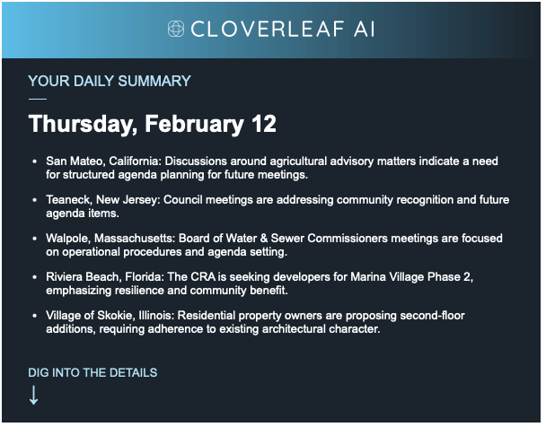
Each morning, Cloverleaf AI delivers a Signals email to your inbox surfacing meetings and documents from the previous 24 hours that matched your Campaign keywords and geographic filters - so your leads come to you instead of requiring you to go looking.
When your email arrives, scan the results and click any meeting title to open it directly in Cloverleaf AI. This is the fastest daily habit for staying on top of what's happening in your markets.
Step 6: Dig Into a Meeting
Once you're inside a meeting, you'll see transcript snippets highlighting exactly where your keywords appeared. Click any timestamp to jump directly to that moment in the video.
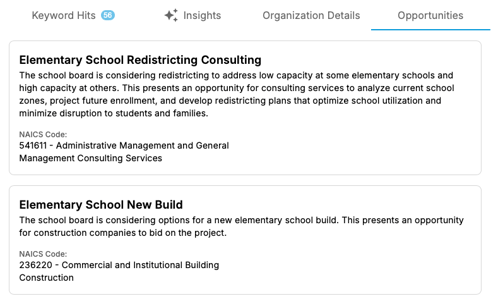
Check the Opportunities Tab The Opportunities tab shows all AI-identified leads from that meeting in one place - each with a brief description, an actionability score, and the target stakeholder you should be engaging. Use this to quickly decide whether a meeting is worth pursuing and who to reach out to first.
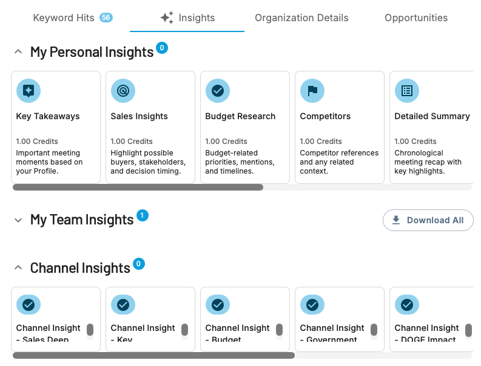
Run a Personal or Channel Insight This is where Cloverleaf AI saves you real time. Instead of reading through an entire meeting transcript, let Cloverleaf AI generate a tailored briefing based on your profile and goals:
- Personal Insight - Analyzes this specific meeting through the lens of your profile - your focus areas, competitors, and the problems you solve. Great for quickly assessing whether a meeting is relevant to you.
- Channel Insight - Goes broader, analyzing meetings across that Channel's full history to surface trends, key influencers, and buying signals over time. Use this before an important outreach or meeting with a government official.
To run one, select Personal Insight or Channel Insight from the Insights section, choose your briefing type, and confirm. Your briefing will appear in the Insights tab and can be copied and shared with anyone on a paid Cloverleaf AI account.
Tip: Don't read every transcript - let Insights do the work. A Personal Insight on a promising meeting takes seconds to generate and tells you exactly what matters to you.
Step 7: Research the Government Body and Its Officials
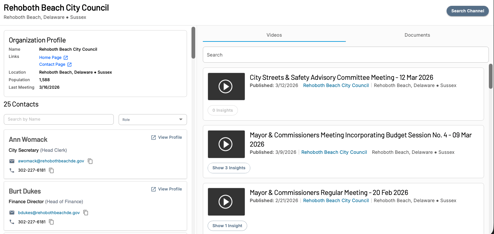
When a meeting looks promising, learn more about the government body behind it. Click the channel name at the top of the page to find the Channel Detail Page for that agency. From there you can:
- Access the agency's contact page and home page
- Review Verified Speaker profiles to see who's active and what topics they engage on
- Click View Profile on any speaker to open their Person Detail Page - where you can search everything they've ever said by keyword to understand their history on issues that matter to you
Step 8: Share or Bookmark Your Best Finds
Don't let good leads slip away. From any meeting page you can:
- Share - Click the share icon on a transcript snippet to generate a link you can send to anyone with a Cloverleaf AI account
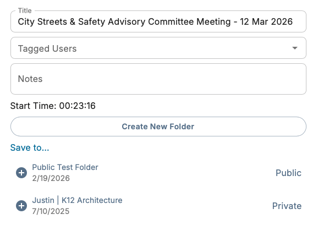
- Bookmark - Click the star icon next to a relevant transcript snippet, add notes, tag a teammate, and save it to a folder for follow-up
Your Quick-Start Checklist
- Complete your User Profile
- Load a Campaign from the dropdown or run your first search
- Save your best searches as Campaigns with an AI Insight and alert frequency
- Check your Signals email each morning for fresh leads
- Use the Opportunities tab to identify leads in any meeting
- Run Personal and Channel Insights to get AI-generated briefings without reading full transcripts
- Research officials on the Channel and Person Detail Pages
- Bookmark and share leads with your team
Questions? Contact us at support@cloverleaf.ai